|
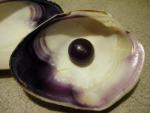
Linnaeus Nucleated Pearls in SwedenLinnaeus, the Swedish naturalist (1707-1778), was the first person in Europe whose suggestion of the possibility of pearl-culture attracted general attention. In a letter to Von Haller, the Swiss anatomist, dated September 13, 1748, he wrote: "At length I have ascertained the manner in which pearls originate and grow in shells; and in the course of five or six years I am able to produce, in any mother-of-pearl shell the size of one's hand, a pearl as large as the seed of the common vetch."
There was much secrecy about Linnæus' discovery, and even yet there is uncertainty as to the details of the method. The Linnean Society of London apparently possesses some of the very pearls grown by Linnaeus, as well as several manuscripts which throw much light on this subject. it appears from the latter that, under date of 6th February, 1761, Linnæus wrote that he "possessed the art" of impregnating mussels for pearl-production, and offered for a suitable reward from the state to publish the "secret" for the public use and benefit. A select committee of the state council of Sweden was appointed to confer with him, and on 27th July, 1761, the naturalist appeared and explained the discovery. After various meetings, the select committee approved the "art" and recommended a compensation of 12,000 dalars (about $4800). It does not appear that the award was paid, and the following year the secret was purchased by Peter Bagge, a Gothenberg merchant, for the sum of 6000 dalars. On 7th September, 1762, King Adolph Frederick issued a grant to this merchant "to practice the art without interference or competition." Peter Bagge was unable to exercise the rights which he had acquired nor was he able to dispose of them to advantage. On his death the memorandum of the secret became lost, and it was not found until about 1821, when it was discovered by a grandson, J.P. Bagge. Under the date of 27th February, 1822, the King of Sweden confirmed to this grandson the privileges which his ancestor had purchased in 1762. Fruitless efforts were again made to dispose profitably of the rights either to individuals or to the Swedish government.
The details of Linnaeus's "secret" have never been published authoritatively. In his "History of Inventions," Beckmann states that before the naturalist thought of the profits that might accrue from his discovery, he intimated that process in the sixth edition of his "Systema naturæ," wherein he states; "margarita test excrescentia latere interiore, dum exterius latus perforatur." "I once told him," says Beckmann, "that I had discovered his secrets in his own writings; he seemed to be displeased, made no inquiry as to the passage, and changed the discourse." In his second volume of his edition of "Linnaeus's Correspondence," Sir J.E. Smith remards: "Specimens of pearls so produced by art in the Mya margaritifera are in the Linnean cabinet. The shell appears to have been pierced by flexible wires, the ends of which perhaps remain therein." Referring to this remark, J. P. Bagge comments: "This is the nearest I have seen any one come to truth, but still it will be remarked by reading the 'secret' that more information is required to enable persons to practice the art." After a thorough examination of the manuscripts and other material, Professor Herdman concludes that the essential points of Linnaeus's process are to make a very small hole in the shell and insert a round pellet of limestone fixed at the end of a find silver wire, the hole being near the end of the shell so as to interfere only slightly with the mollusk, and the nucleus being kept free from the interior of the shell so that the resulting pearl may not become adherent to it by a deposit of nacre. Professor Herdman notes that, between 1751 and 1754, an inspector named Frederick Hedenberg received an annual salary "to inoculate the pearl mussels of Lulea (in the northern part of Sweden) with 'pearl-seeds' which he manufactured, and then to replant the mussels. Certain pearls were produced by the inspector, which it is recorded were sold for some 300 silver dollars." Shortly after Linnaeus communicated with the Swedish government and before his death, it was learned in Europe that the art of production "culture pearls" by a somewhat similar process had been practiced by the Chinese for centuries.
Read about Natural pearls found in Sweden.
|