


|
The History of Native American BeadingNative American beading takes beading to artistic extremes. 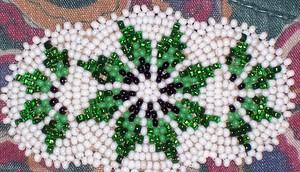 Native American Beading by Denny Family Beads hold a wide appeal for modern people, as you can tell just by taking a quick look online - jewelry stores, toy stores, specialty shops, crystal purveyors, hobby stores…they're everywhere. In this way, we're not all that different from our ancestors; beads have always fascinated people, from the moment they first pieced together necklaces made of pierced seashells and animal bones more than 70,000 years ago. In the long history of beads, it's doubtful that any people have taken to them as well as the native peoples of North America. From the Five Civilized Tribes to the Comanche, from the Cree to the Crow, beads and beading have played an important role in the development of Native American jewelry, embroidery and hairstyling, and still do. Modern bead craftsman can learn a lot from the Native Americans, if they're willing to try. A few new materialsIt's no surprise that Native Americans were willing to trade for beads back in the days of first contact with the European explorers and settlers. Beads had long been an important part of most native cultures, and besides, they'd never seen some of the newfangled materials they were offered, such as glass and ceramics. Until then, only natural materials were available: but what great materials they were! Hunters and warriors wore necklaces of animal teeth and claws to prove their strength and cunning. Wood was carved, drilled, and often dyed before stringing. Turtle shell, deer hooves, and horn were carved into beads. Large seeds were steamed and strung onto dried grass and sinew to make necklaces and beaded lanyards, and smaller seeds were often used as, yes, seed beads for embroidery. Porcupine quills, flattened and dyed, were also used as seed beads. Bones, especially hollow bird bones, could be easily fashioned into beads. Small stones, especially the semi-precious kind (think turquoise) were also made into beautiful beads, both disk-shaped and round, mostly for jewelry. These were the ancestors of the Southwestern turquoise and silver jewelry so popular today. Then there was shell. Various types of shells were used all over North America; marine shells were most popular, and were often traded across the entire continent. Shell beads reached their highest expression in wampum, the strings and belts of lovingly polished cylindrical beads that were used to record histories, treaties, and songs. More than jewelryEven before trade beads became common, numerous Native American societies were skilled in the art of bead embroidery and quilling. This type of beading required careful, meticulous work, and often the process and knowledge involved was considered sacred -- although the finished products were not. Beaded items, from shirts to moccasins, might be used on ceremonial occasions, special events, or as burial clothing -- as many an archeologist has discovered, to his or her chagrin, when presented with a burial containing the remains of bead regalia, including several thousand loose seed beads no bigger than the head of a pin! Beading continues to be a Native American specialty to this day, with hundreds of artisans producing necklaces, bracelets, and embroidered clothing for special events, dances, powwows, and the tourist trade. If you want a pair of beaded moccasins or a nice beaded ID lanyard for work, you can get them for the right price. Most modern artisans buy their beads pre-made, but the Navajo and some of their Puebloan neighbors still make henshii beads by hand out of shell and stone, in a way that hasn't changed substantially in hundreds of years. Published with permission (FCDMInc) |