New Composite Material Is Almost Better Than Mother-of-pearl
Researchers in ETH Zurich’s Department of Materials (D-MATL) have developed a new nacre-like composite that is twice the strength of naturally-occuring mother-of-pearl. Stronger ceramic platelets combined with ductile biopolymer Chitosan have created composites capable of withstanding a deformation of 25% before rupturing.
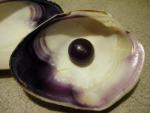
Nacre, or mother-of-pearl, is one of nature’s outstanding examples of a durable brick and mortar structure. Made of stiff, inorganic aragonite platelets and ductile biopolymers, the material combines toughness with a surprisingly high degree of strength. The researchers, led by Ludwig Gauckler, Professor of Non-mettalic Inorganic Materials have shown that ceramic alumina platelets and biopolymer Chitosan can be assembled layer-by-layer to form thin foils of a composite material exhibiting a nacre-like structure.
Nearly better than the original
In comparison to the stronger composite material developed, natural nacre deforms only one to two percent before reaching breaking point. Because it is not yet possible to obtain defect-free structures of such high platelet content as nacre, the stiffness of the new composite is five to seven times less than that of its natural counterpart. However, the new composite retains most of the ductility of polymer matrix composites, materials which can be used at high temperatures and are stronger, lighter and more resistant to corrosion.
Read entire article here.
Join in and write your own page! It's easy to do. How? Simply click here to return to Mollusc News.