Where Do Pearls Come From?
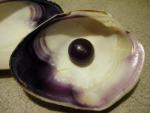
'Where do pearls come from?' is a question whose answer many people would like to know. Though there are many rare gems, the pearl is the only gem that comes from the ocean's womb. According to a popular Arab myth, pearls were formed when the oysters swallowed dewdrops that fell into the ocean in moonlight. Though many bivalves like mollusks, including abalone, a large sized sea snail and mussels, create pearls, it is the oysters' pearls that are more sought after. Pearl oysters belong to a family known as Pteriidae, also called feathered oysters. The pearl is highly valued as a gemstone and is considered unique among other gemstones as it is the only one that is created by a living organism.
When a foreign substance enters the shell and resides between the mantle and the shell, the oyster secretes certain chemicals like conchiolin and calcium carbonate to cover it as a part of self defense. This irritant or foreign object can not only be a grain of sand but it can be anything like animal tissue, parasites, organic debris, etc. The nacre, or inner shell, continues this secretion until it covers the substance by forming several layers on top of it, eventually leading to the formation of a small substance referred to as pearl. Contrary to the belief that all pearls are perfectly round, the pearl takes irregular shape according to the irritant. These pearls are known as baroque pearls. The formation of pearl takes upto 6 to 7 years. There are many varieties of oysters that produce different types of pearls, but not all of them are attractive and they lack commercial value, and so are not used to make pearl jewelry.
Read more about where do pearls come from here.
Join in and write your own page! It's easy to do. How? Simply click here to return to Pearl News.