|
Keshi Pearls A Spontaneous By-ProductPossessing a whimsical charm entirely different to the perfectly round, large pearls typically cultivated in the waters off northern Australia, these "seedless" pearls arise spontaneously and are a bi-product of the culturing process of Akoya and South Seas pearls. Not well known and rather misunderstood—these pearls are, in fact, a type of "natural" pearl. During the process of making a cultured pearl, farmers sometimes find these pearls, identical in every way to a natural pearl, except for the fact that the oyster was touched by human hands before this type of pearl was found. 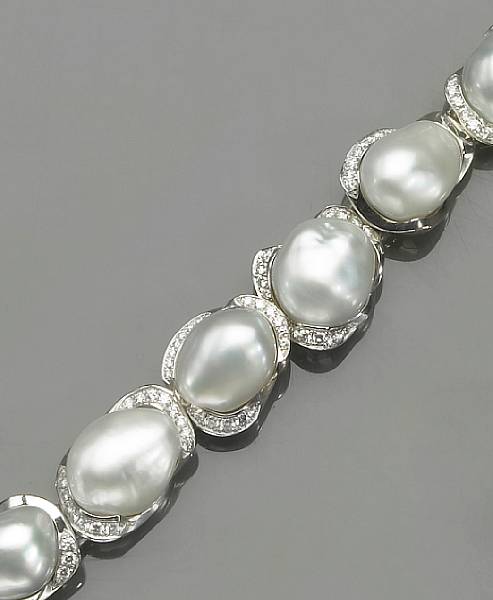 Keshi Pearl & Diamond Bracelet Keshis are created naturally in the soft tissue of most cultured pearl-bearing oysters and mussels. They are usually formed by the accidental intrusion of tiny natural organisms such as parasites, eggs, sand fragments of shell or small particles of mantle tissue that have detached themselves from the implanted nucleus. Keshi is a Japanese term meaning “seed”, referring to the typically small size in which these pearls are found—usually in the 2 to 10mm size. The flexible bracelet is, therefore, a rare collection of these pearls which would have taken considerable time form. So well matched for their silvery luster and overtones— due entirely to the fact that they are 100% nacre—it seems wondrous that they are a happy accident. These pearls, especially Tahitian and South Sea keshis, were once quite the bargain since they were misunderstood. Today they are much more rare. This is because Tahitian and South Sea pearl farms are now x-raying oysters to determine whether or not the nucleus has been expelled. When a nucleus-free oyster is found they are then re-nucleated before a keshi has time to form. This practice has made keshi pearls much more of a rare find than they once used to be. Text and photo used with permission by Claudia Florian G.J.G, Co-Director of Bonhams. Learn more pearl terms in my pearl glossary after reading about keshi pearls. |