Button, Button, Who's Got the Button?


Button Factory
It was once a superstitious practice to count the buttons on our coats to the old rhyme: “Rich man, poor man, beggarman, thief, doctor, lawyer, merchant, chief.”
Even though the fortune which it foretold did always come true, it is true that a plant in Keokuk turned buttons out by the tons in the first half of this century.
A branch plant of a Muscatine firm, “the button capital of the world,” it commenced manufacturing buttons here right after the turn of the 1900s and had about 200 employees on its payroll!
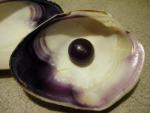
Called “pearl” buttons because they were made from freshwater mussel shells of the Mississippi River, this category of buttons was the most important class, both in quantity and value, produced in the United States. Although this eastern part of Iowa rivaled the world in production during their peak of popularity, four other states — New York, New Jersey, Pennsylvania, and Connecticut — also were large producers of buttons.
Here they were made from clam shells from the bottom of the river, just like the clam shells that have angered anglers through the years as they pulled in their fishing lines with one on the hook!
Little circular disks were cut from the shells, called “blanks,” by means of a tooth die which was fastened into a machine that came down on the shell with pressure and a twist, just as a mother does when she cuts out cookies. The blanks were ground down, then a little pit was ground into the center, after which the holes were drilled and the buttons most often sewed on cards.
Only a few years before the establishment of the industry here (up until about 1890), most of the pearl buttons used in the United States were imported from Austria-Hungary and Germany. Within 25 years, the imported buttons were practically eliminated from the U. S. market.
The history of buttons is an interesting one: –
In early times, clothes were fastened with pins, brooches, buckles, ties, and sashes or girdles. But back in the 15th century, someone discovered that a loop slipped over a button, or a button pushed through a slit in the cloth, would make a good clothes fastener. Buttons were also worn as ornaments, and those desiring to be dressed in the extreme of fashion would display a wealth of buttons sewed on their clothes without regard to usefulness. For this reason, some religious bodies, such as the stricter Mennonites, forbade the wearing of buttons and allowed only hooks and eyes on the garments of their members.
Some buttons, which now seem only put on for ornament, once had a very definite use. This is true of the buttons on men’s coat sleeves, which were once used to button back the sleeves to leave the hands free, and those at the back of the frock coat, which were used to fasten up the long skirts of milady when riding horseback!
Buttons at first were very expensive. They were often made of gold, silver, or pearl, ornamented by designs, and inlaid with precious metals and jewels.
They had to be shaped and decorated by skilled tradesmen, working painstakingly on one button at a time.
Other buttons were made from ocean shells, chiefly the white shell from West Australia, the yellow shell from Manila, and the black shell from Tahiti.
These were reserved for better-grade shirts, blouses, skirts, dresses, and underwear — while Keokuk-made buttons were used on medium-quality and cheaper-grade garments.
“Ivory” buttons were made from the South American tagua nut after being dried for three to six weeks.
These were easily dyed and were often made to resemble the cloth upon which they were to be worn. Metal buttons have always competed for popularity, and buttons were made of glass for many years. Bone buttons were made from the shin bones of cattle — which was probably the cheapest button of all.
And then along came plastics. Button, button, who’s got the button?
The plastic industry has most of them now!
SOURCE: https://www.mississippivalleypublishing.com/the_hawk_eye/button-button-whos-got-the-button/article_0d0320d4-388c-11ee-ab8e-c346ec3f6080.html
Join in and write your own page! It's easy to do. How? Simply click here to return to Mollusc News.